Showing posts with label brazilwood. Show all posts

Monday, 12 April 2010

FO- Owls

I love owls. There is something so mysterious about a bird that can hide itself so well in plain sight and move with such stealth. Their forward-facing eyes make them eerily human looking.

Owls 124

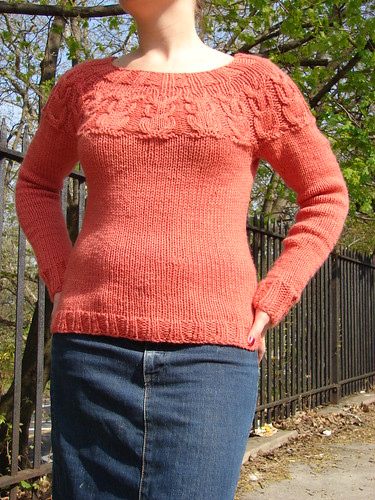
While owls are solitary creatures, they gathered pretty cutely on my sweater. A rare gathering of owls is known as a parliament. I'm pretty sure George Clinton is somehow involved with this.
Owls 129

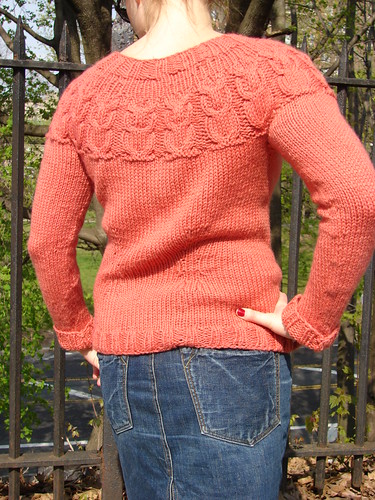
I will now drunkenly stagger around and threaten to show everyone my hooters.

Owls133

The specs:

The Owls pattern is by Kate Davies. The sweater is simple in design and it works up fast...something you could finish in under a week if you put your mind to it. I made long sleeves but it would look cute as a short sleeve top as well.

I used up all 6 skeins of Rowan British Sheep Breeds Blue Face Leicester- about 720 yards- for a size 4 (38"). This is the yarn that I dyed using Brazilwood chips a couple of month ago. It's a worsted-spun round 3-ply chunky-weight yarn with excellent stitch definition- perfect for cables. Of all the yarns in the British Breeds collection (this is a lovely idea as I love breed-specific yarns, especially those that promote rare breeds) the Blue Face is by far the softest- I can wear this next to my skin with absolutely no discomfort. If I were to use a different sheep breed in the line, I would go up a size so I could easily put a layer on underneath and have less skin contact with the fabric. The BFL makes a silky, drapey fabric with gorgeous sheen. I also loved the fact that this yarn was lightly processed- it smells vaguely sheepy, which means I could sit there and huff it in public for hours with no regard to what others might think.

Is it wrong of me to want a few more crisp, cool days so I can wear this before it gets put away for the summer?

Tuesday, 16 February 2010

My first Brazillian

No one ever forgets their first Brazillian.

wips 026

wips 025

wips 023

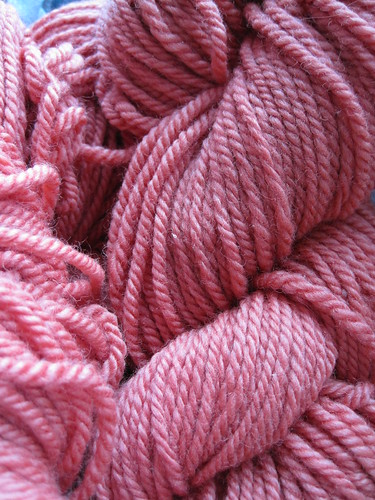
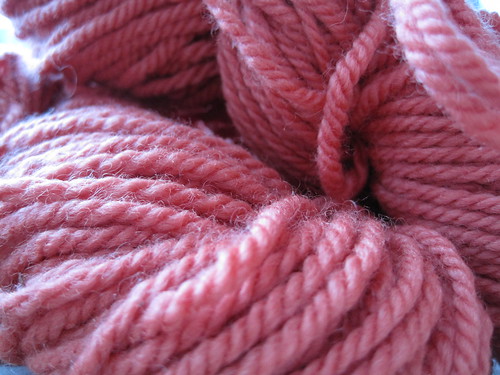
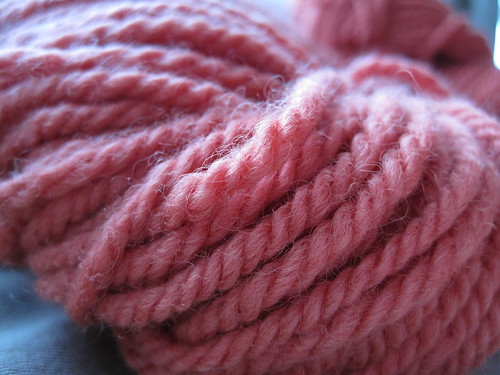
The yarn I dyed in Brazilwood shavings came out a brilliant pink-orange shade. It reminds me of a tropical sunset:

Puerto Rico 2007 403

I have a few projects to finish up before I cast on for the Owls sweater, but I'm tempted to sneak it in. I love the way this yarn came out. Over the weekend, I dyed some more yarn and some roving in the exhaust bath and got progressively paler shades of pinks, all of them lovely.

Thursday, 11 February 2010

Natural Dyeing with Brazilwood: Dyeing Kills Me

Did I mention that natural dyeing is a two-day process? I don't do it too often because I rarely can find two days to devote to this. I'm afraid that I'll start a dye pot and then have life get in the way...days later, I will return to a stinky moldy dye pot. Bleh. It's nice to be snowed in sometimes.

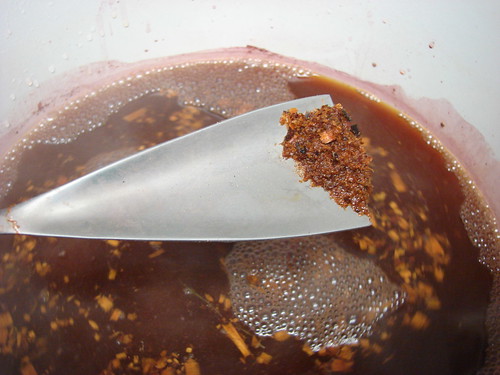
If your natural dyestuff comes from bark or roots, you're going to want to let it steep overnight to get the most bang for your buck. I filled my dyepot halfway with water and added 8oz of sawdust. My yarn came to 7oz total weight, and for Brazilwood you want to have pretty close to 1:1 ratio. I would rather not have 1oz bag of woodchips lying around, so I just threw the whole thing in. Ahhh, the exact science of natural dyes.

spindles 046

I wear a mask while adding the shavings. You get a lot of dust coming up before the wood gets soaked, and it's not really all that good to breath that in. Natural dyes usually have mysterious warning labels of not being FDA approved- do not breath, ingest or touch. Or what will happen? I'm kind of curious to find out, but I tend to take these warnings seriously.

Bring the dyepot to a simmer, stirring occasionally. Let it simmer for at least an hour. Cut the heat and let the dye steep overnight.

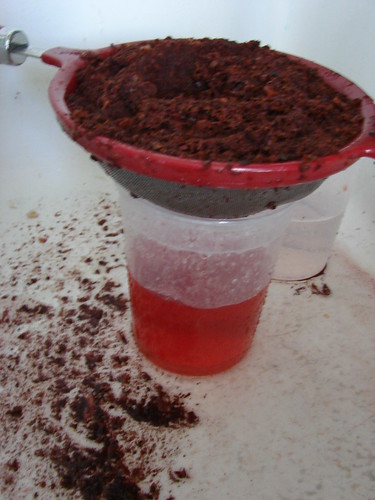
The next day, you have to get all those woodchips out. I used a mesh strainer. I make a mess.

spindles 048

You can save the chips, let them dry out and re-use them if you would like. You won't get as strong of a color out of them, but they will give you more.

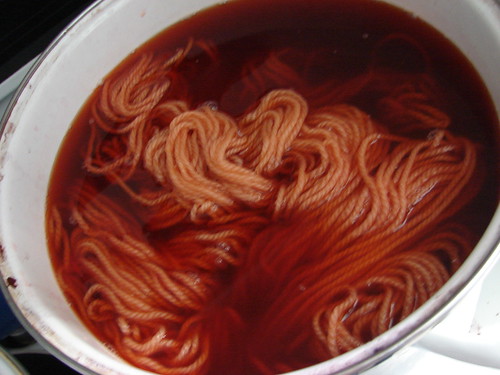
Throw the strained dyestock back into the pot. Add your mordanted yarn. Add water to cover. Once again, you want to gently bring this to a simmer while occasionally rotating the yarn to promote even color uptake. Heat will set the dye, so you want to simmer this for at least an hour. Once that it is done, cut the heat. Throw the lid on. You can take the yarn out in a couple hours when it is cool enough to handle and rinse, or you can leave the yarn in the dye overnight if you want a darker shade. I took the overnight route with this batch.

spindles 049

The next day, I then fill the bathtub with warm water and soap. I carefully rinse the yarn to get as much excess dye as possible. Some dyes will leech more than others and you might have to repeat the process. This bled hardly at all. However, I did find that the strainer did not get all the wood chips out and they ended up in the yarn. No worries, as soon as it is dry it can be shook out.

I give the yarn a final rinse in a little vinegar and then hang to dry. Voila!

I've been dealing with crap lighting and stormy skyes all week, so no FO picture yet. I'll keep you in suspense for a bit.

Natural Dyeing with Brazilwood: Mordanting

Last fall at Rhinebeck, a friend and I came across Norm Hall's booth. Norm handcrafts spinning wheels, doesn't have a website, and has a waiting list that is years long. His wheels are gorgeous.

I wasn't in the market for being on the 5 year waiting list, but I did notice that he had bags of brazilwood shavings for sale as a by-product. You can get some really nice reds from brazilwood in the dyepot.

Here is my chosen victim:

spindles 038

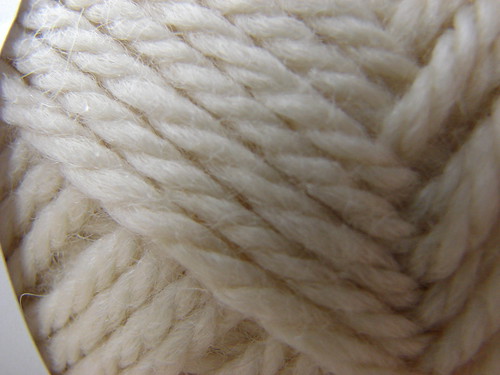
I had seven skeins of Rowan Purelife British Breeds in Blue Face Leicester in boring white. It's a nice round 3-ply chunky yarn. I am planning on making the Owl Sweater with it, but I didn't want a white one. BFL is a good candidate for natural dyes since it is a longwool and it doesn't felt easily. There is a lot of rinsing and moving the yarn around during this process and I find it soothing to use a wool that I don't have to obsessively worry about destroying.


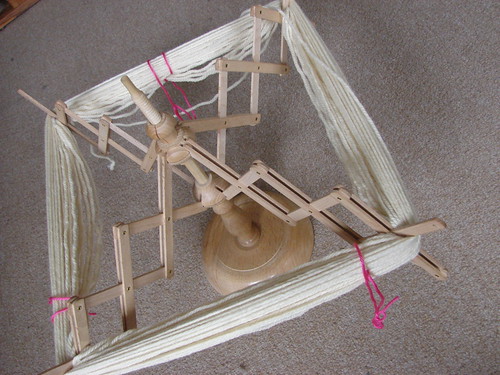
I wound the balls of yarn onto my swift. It's faster to spin that sucker around then use a niddy noddy.

spindles 040

Once I had all seven skeins done, I put big lose ties on them in four places to keep it from tangling. Natural dying involves a lot of steps and moving the yarn around, so it's best to put a lot of ties on the skeins to avoid a mass of tangles. I threw the yarn in a warm soapy water bath. This is important- any dirt or oils from your hands or mill machines will make the dye take up unevenly. Getting the yarn wet will also help with dye intake- it will take up the mordant and dye more evenly if the yarn is soaked through.

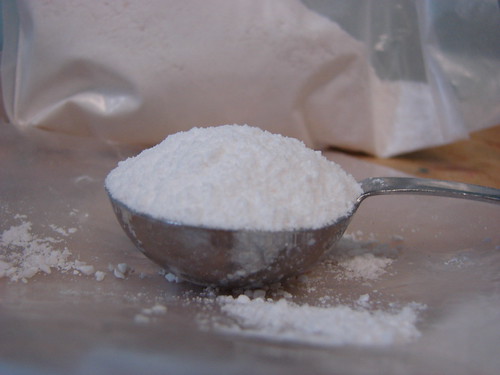
While the yarn is soaking, I mix up the mordant. I use Alum, which is also used as pickling salts, so it's fairly non-toxic. I use a lot of precautions as I dye in my kitchen (and I use said kitchen to cook quite a bit) so I use the least toxic chemicals I can find. The mordant allows natural dyes to attain some degree of washfastness. If you don't use a mordant, the color will just wash out and end up all over your hands and clothes as you work with it. A mordant remains in the fiber permanently, holding the dye. It also effects the final color outcome.

spindles 041

I also added some cream of tartar. This will brighten shades and soften the yarn. I go by the rule of thumb of 4 oz of mordant to 1lb of goods, and 1 oz of C of T. If you use too much mordant, it will make the fiber brittle.

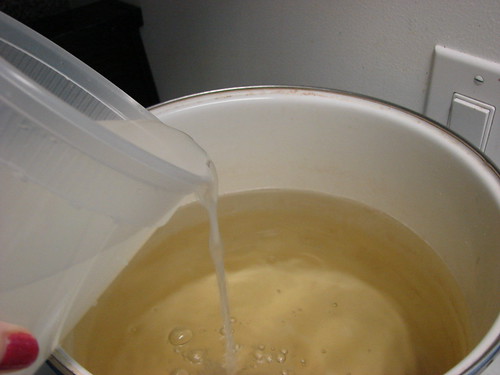
Dissolve the mordant and C of T in some warm water, and then add is to a larger pot of water.

spindles 043

Rise the soap out of the yarn and add it to the mordant pot. Then slowly, and carefully, bring the pot to a gentle simmer. Hold it at the simmer for an hour and occasionally rotate the yarn (don't stir, or you'll end up with a felted mass).

Once the hour is up, cut the heat and let the yarn cool down to room temperature. Take the yarn out and rinse it at the same temperature. I then put mine in plastic bins to keep it damp since it takes overnight to make the dye stock.

Up next: making the Oh So Pretty colors.