Showing posts with label raw fleece. Show all posts

Tuesday, 27 October 2009

Mothball Mohair

I had been looking for a baby mohair fleece for a while now. I'm not a huge mohair fan, but the superfine baby stuff is amazing. Really amazing. It blends really nicely and adds strength and luster to anything you mix it in with.

MDSW 2009

MDSW 2009

MDSW 2009

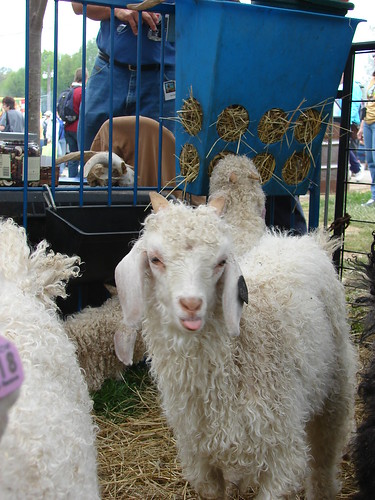
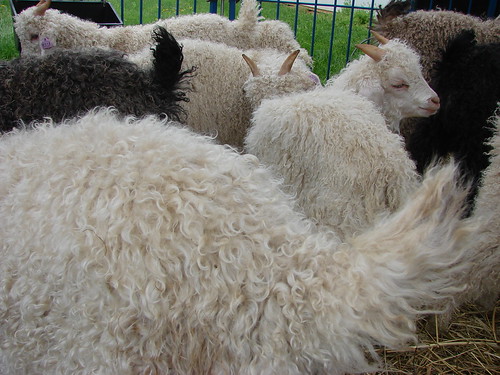
Kid angora goats are absolutely adorable as well.

At Rhinebeck, they have a separate sale for mohair and alpaca fleeces. I got there kind of late since I was petting the Leicester Longwool sheep and watching the nice people from Colonial Williamsburg do a combing demo. They still had lots fleeces left at noon, but it seemed like the really primo ones were gone already. Nothing was striking me until I saw this:

oct2009 232

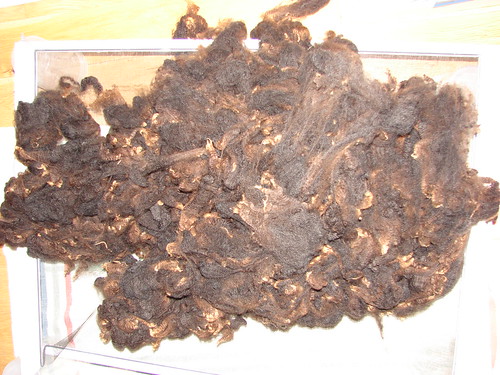
That's my golden fleece right there. It is the first shearing of a six month old angora goat. It had long, silky ringlets of the most gorgeous golden brown color. 6-7 inch staple length throughout, clean as can be. Did I mention how soft and silky it was? Anyway, I was in love.

I took it to the checkout table and the refreshingly honest gentleman there gave me a warning: this fleece had already been returned once because it smelled of mothballs. MOTHBALLS! I shrank back in horror. Slowly, I crept back to the trash bag of fleece and with shaky hands, opened it back up. I inched closer and let my nose hover a couple feet above and took a whiff.

Yup.

There's no mistaking it.

Mothballs.

I whipped out my phone and started calling fleeceophiles and goat breeders I knew. Has anyone ever dealt with a fleece stored in mothballs? I was assured by one goat breeder that the smell would wash out with a little ammonia added to the bath. Other people said that there was no way it would wash out. Finally, we had a very nice goat shepherd stop by, kvetch about how terrible it was for someone to store their fleece in mothballs, but assured me that it would wash out.

A ten dollar discount made me feel better about the situation in general. Baby mohair isn't exactly cheap.

Once home, I set about to washing this right away. The smell was strong- what I didn't originally pick up on right away at the fairgrounds was now filling my apartment with that awful chemical smell. I think the reason why I failed to originally detect the smell when I chose the fleece was a combination of all the sheepy and goaty smells that might have overpowered it, and the fact that it was cold enough out to make my nose run a bit making anything but the most odoriferous smells hard to detect. Once it was home, it was definitely the only thing I could smell.

I did my standard fleece-washing treatment- hot water and a whole lot of Dawn.
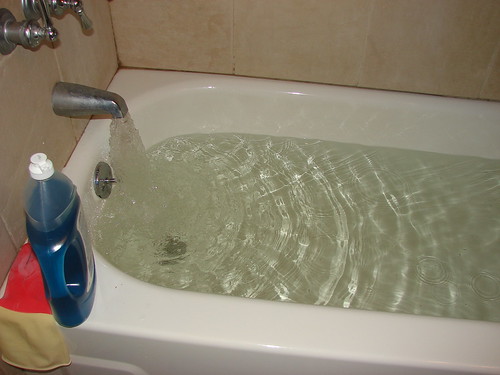
oct2009 219

Mohair has a wee bit of lanolin in it. No where near as much as a sheep, but enough to leech a little brown into the bathwater. I would usually only give it one wash, and then a rinse or two.

After the third wash (with lots of soap) I finally felt as though maybe the smell was dissipating. I did two rinses with a whole lot of vinegar. Most of a bottle, and a little bit more for good luck.

I then dried the fleece on a window screen with about a dozen of cedar blocks tossed in and a fan in front of it. Once or twice a day, I would come by and give the whole think a flip.
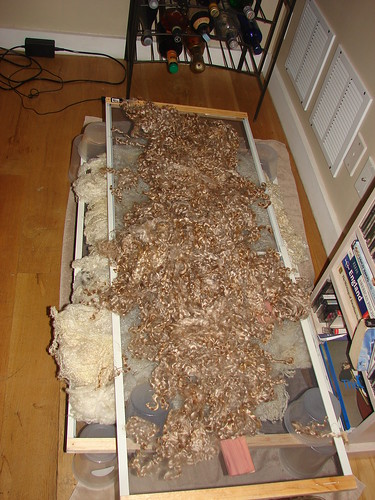
oct2009 222
That's my fleece drying condo, built right next to my alcoholic beverage condo.

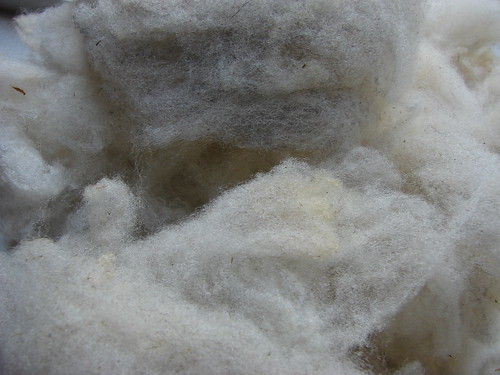
I'm happy to report that the mothball smell is completely gone. I bagged some of the fresh clean fleece up and passed it around to some knitters and spinners at my local meetup, and it passed the test. Not a hint of mothball remains.
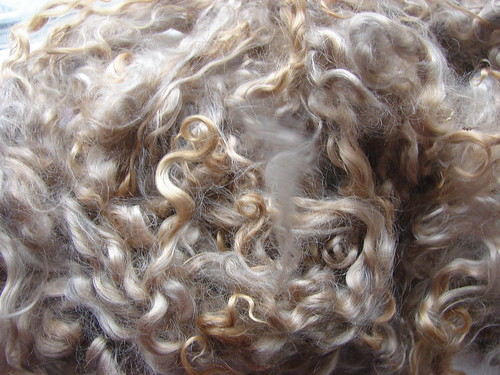
oct2009 231

On a side note- I found out it was Steph from Loop who originally bought the fleece and then returned it. Thanks, Steph.

Monday, 14 September 2009

Seven bucks later...

Sunday a carload of Brooklynites piled into a car and drove out to the Garden State Sheep & Fiber festival. It was a pretty sweet little event. It was very small but it had some quality vendors- lots of small farms from Jersey and PA that don't make it to the big festivals. Attendance wasn't really high so it was nice to be able to stop and chat and not feel rushed.

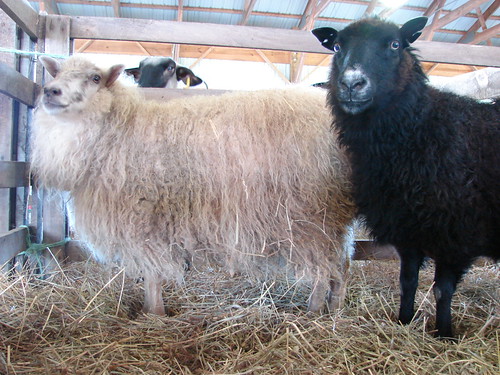
There were lots of sheep:

sept2009 229

Icelandic and Shetlands made up the majority of the breeds, but there were also some BFL, Cheviot, Romneys and CVMs. This moorit CVM caught my eye:

sept2009 233

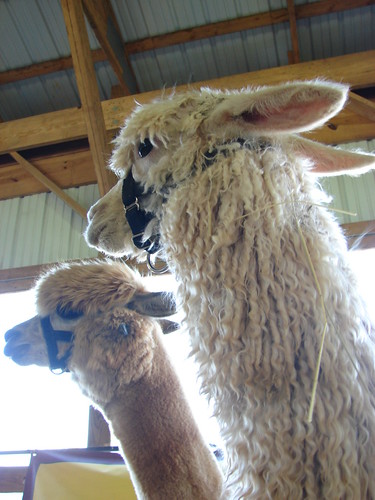
And there were alpacas:

sept2009 250

That's a Huacaya on the left and a Suri on the right.

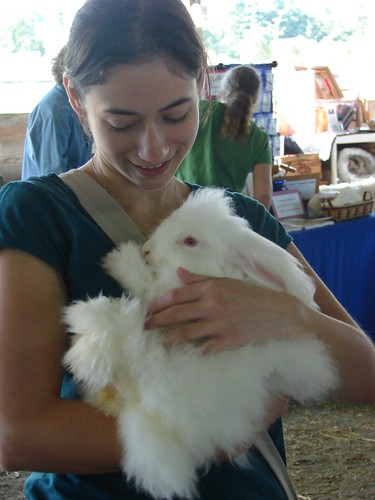
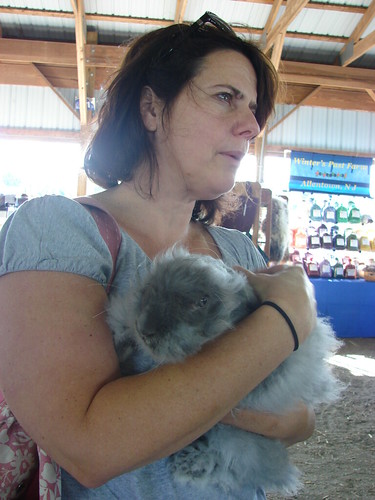
And there were bunnies. Fabulously soft angora buns:

sept2009 236

sept2009 235

These are like human babies, but softer and cuter. Added bonus that you can spin from them. I'd like to see you try and do that with a human baby.

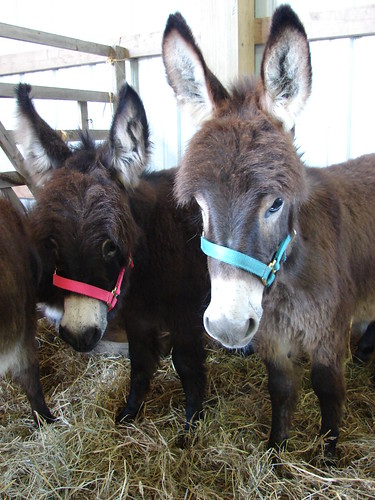
There were also mini-donks, which made me think they could flap their ears and fly away:

sept2009 237

I can not resist the power of cute.

They did have fleeces for sale. The one that spoke to me was an 11 lb white cormo. Long staple, super crimpy, free of VM. I kept going back to it trying to justify it, but I still have a whole lot of my MDSW cormo fleece at home needing a good spinning, so I walked away. They had a few nice Shetland fleeces, and I do have a weakness for Shetland. It's the opposite of cormo- straight and silky, and the colors in each fleece are pretty amazing.

What was surprising was the amount of crap fleeces I saw. The majority of fleeces up for sale there were dirty, full of second cuts, matted and felted, not skirted (!), sunburt or worse. Granted, most of these fleeces were priced accordingly, I found the fleece auction to be underwhelming.

My sole purchase for the day was some angora fiber, which set me back $7. I have never been able to get to a fiber festival and come home just seven dollars poorer. Also, instead of spending my Sunday night washing fleece in the bathtub, I went for a walk, knitted in the park for a bit, made dinner, spun, caught up with a friend.

Maybe I'm just atoning for future purchases.

Monday, 27 July 2009

CVM Fleece

I just posted the CVM fleece on my Etsy site. It is washed, gorgeous and in very manageable 4oz portions.

fiber 012

If combing and carding is not your thing, I will soon have some CVM batts up in the coming weeks.

Thursday, 23 July 2009

More Fleece on the Way

It's been raining. And raining. And raining. Since I take my photos outside, I haven't had a chance to post some rather amazing gray CVM fleece on the Etsy site. Hopefully this weekend will allow for some sunnier weather.

Tuesday, 30 June 2009

Cadfael

I went to Maryland Sheep and Wool this past spring with one thought in mind: Blueface.

MDSW 2009

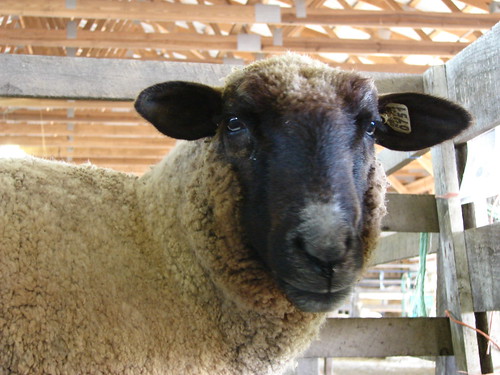
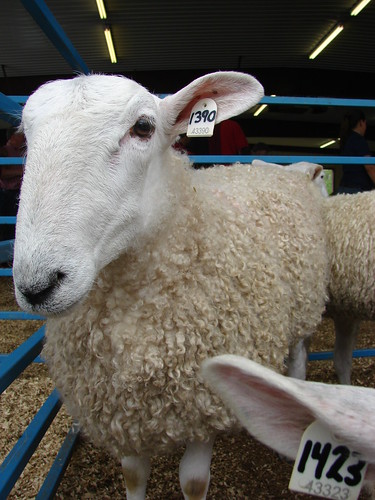
Blue Face Leicester sheep are a British longwool breed. Like many sheep breeds, they are in danger of disappearing and they are considered a rare breed. They get their name from the fact that many of them have black skin and white hair on their face, giving it a bluish tinge.

MDSW 2009

I couldn't get over their curly, soft locks.

MDSW 2009

Almost compulsively, I found myself sinking my hands into the fleece every time I saw one. I loved their big roman faces. They are very "sheepy" looking to me.

I went early to the fleece sale and searched the tables for one. I found 2 rather sad, dirty BFL fleeces and a 3rd that cost about $200 for 3 lbs.

So I took off to sweet-talk a fleece off a sheep. Or a farmer, rather. I didn't find one until late in the afternoon, and it was still attached to the sheep. His name was Cadfael, and he was a year old ram from Wits End Farm. They had a few rather stunning sheep, but this guy stood out to be my BFL fleece. He was due to be sheared shortly after the festival, and I made arrangements with Mr. Cody to purchase his fleece.

A few weeks later, he arrived in the mail:

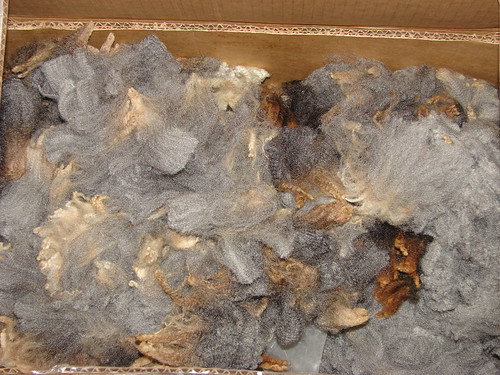
etsy 303

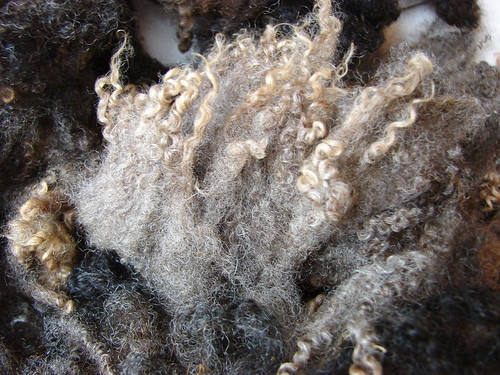
Browns and grays and creams oh my!

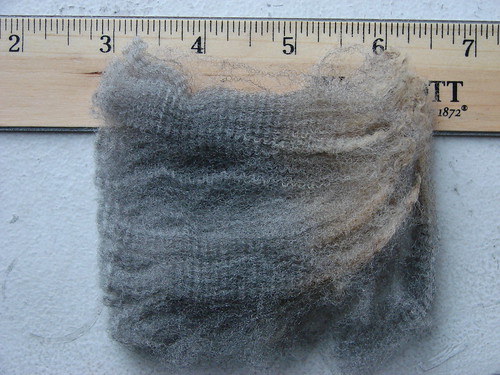
I did card some samples to spin. This is going to be a big project. All those little tiny curls will have to be picked out before it is carded. Luckily, BFL don't really have huge fleeces, so I've only got 2 lbs to do!

Friday, 12 June 2009

Mutant Yarns

One of my favorite breeds of sheep to get fleece to work with is the California Variegated Mutant (CVM). These are a rare breed of American sheep that are crosses between Romeldale and Romney sheep.


Most sheep bred for their wool are white. The textile industries wants white wool so that there will be consistent dye lots- it's hard to get bright colors overdyed on brown and gray fleece. Over the years, sheep with colored fleeces have been considered unwanted and culled out. Instead of thinking about the odd family outsider as a "black sheep" at your next family reunion, think of them as being colorful. Then sit down and enjoy the lamb kebabs on the grill that were probably from a lamb with a recessive gene.

The CVMs are special because they have been almost exclusively developed for fleece for handspinners. Their fleece is wonderful to spin and knit. It's got great crimp and sproing, it's soft, dense, a fairly long staple length and it has a ton of character. Each fleece might have multiple colors and shades in it since these sheep can have spots or peidbald patches.


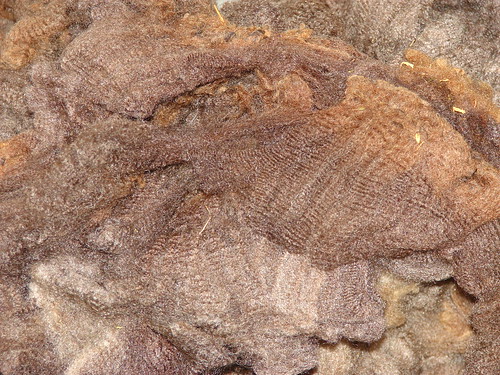
Above is a gray fleece from a CVM sheep named Rose from the White Barn Farm in Michigan. She is a varigated gray ewe with some brown and black and tan thrown in there, just for interest. I can't wait to start spinning this! All 5lbs of it is washed and packed into a space bag, waiting for some space on my project queue to free up. I should be able to get at least 2 sweaters out of her.

Rose as a lamb- from the WBF website

If you love working with fleece, you will love this breed and learn to seek them out! There are only 2,000 CVMs registered worldwide. When you buy their fleece, you are helping to support the flock. This is what I tell myself when I squeeze another bag of fleece under my bed.

Here is a dark brown varigated fleece that I purchased from Joy at Arbor Meadows Farm in California.


I couldn't help myself and bought enough of the variegated brown to spin for a sweater, which is one of my current WIPs. It started out about 2.5 lbs raw. I washed it and carded it on a drum carder.


I am spinning lace weight singles and then 3-plying them into a DK weight yarn on my Kromski Minstrel. I think it will make a fabulous cabled sweater. I usually try to spin with at least a foggy idea of a specific project, but sometimes when it's time to swatch, the yarn just wants to be something else.

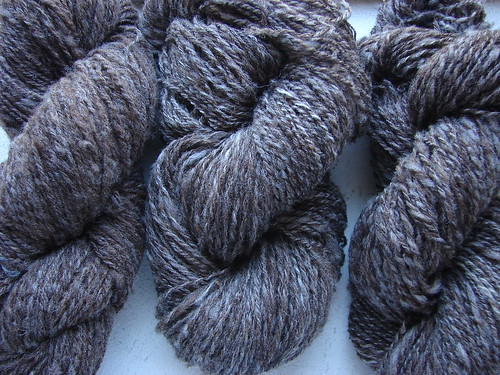
finished CVM yarn

I've spun up and plied about 700 yards so far, with another 3 bobbins of singles needing to be plied. I've knitted some swatches, and the varigations of colors make it seem heathery. I can't wait to really start knitting this. I'm thinking one of the sweaters from a Fine Fleece; perhaps Espresso (ravelry link)?

Thursday, 11 June 2009

Washing Fleece

I have a small addiction to raw fleece. I love having a final knitted product that came from my own hands every step of the way. It takes a little work to wash your own, but it's nothing that can't be done on a rainy afternoon. I know there are people out there who have more fleece than I do, but most of them have a house or a barn to keep all the fleece in. My apartment, while large for NYC, is still an apartment. I can't keep a stank-ass fleece sitting around for too long before people start to notice.

My latest fleece acquisition is a gorgeous Cormo/Romney cross from the Maryland Sheep and Wool Festival. I got there early with my friend Dawn and we headed right for the fleece sale for some mad pawing and sorting through bags of fleeces (I'll get into choosing a fleece in another blog post). This one spoke to me- it has great crimp, it was super soft, had a long staple length (six inches relaxed!), and it was very clean.


Don't let the small sample fool you, the entire fleece was almost 8lbs! I was able to sell off a pretty good chunk via my Etsy store, but I left myself with at least 2 sweaters' worth, which is about 5 lbs raw.

Back to the washing.

What you'll need: A bathtub filled with hot hot hot water, a fleece scour or blue Dawn dish detergent, some lingere washing bags and rubber kitchen gloves.

The first thing you want to do is shake out and pick out any nasty bits and larger pieces of VM (vegetable matter) in the fleece. I do this outside on my front stoop since it can be quite messy. Most fleeces you buy at a sheep festival or from a reputable shepherd will be well skirted- meaning all the poopy bits and the fleece around their face have been thrown away. Still, some gets by on occsaion and I like to shake out any second cuts that might be in there. Then I'll grab a few handfuls and stuff it in the lingere mesh bags. You don't want to fill these too full or you won't get the fleece clean. Anything that doesn't make the cut, throw it in the compost pile- it makes for wonderful compost.


Sheep produce lanolin. This is a greasy, yellow-brown substance from their sebaucous glands which helps waterproof them. It's used commerically in hand creams and waterproofing. Depending on the breed of sheep, anywhere from 5-25% of the weight of the raw fleece is made up of lanolin. Working with raw fleece has the added bonus of making your hands soft, but it does have the drawbacks: it attracts moths, it will gunk up your spinning and carding equipment and it has quite the farmy odor to it. Not being a country bumpkin, I would like to get rid of this lanolin and run down the street to get a manicure to get my hands soft instead.

If you are able to turn your water heater up, now is the time to do so- you want the water to be around 140 degrees. I do not have this option, so I get a kettle on the stove and boil some water to add to the tub. The purpose of this is to melt the lanolin away. Once the tub 3/4 is full I cut the water, add my boiling kettle water and don my heavy-duty dish gloves (burns are bad).

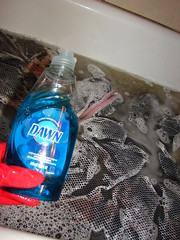
About the Dawn soap: remember in the dishwashing ads how effective Dawn is at cutting grease? That's why it rocks at getting the lanolin out of you fleece. Also, it is PH neutral, so it won't strip too much of the good oils from your fleece. When birds and wildlife are caught up in an oil spill, rescue workers actually use Dawn to clean the oil off them, so I feel pretty good about using it on my fleece. Soaps that are too alkaline will open up the scales on the wool and increase your chances of felting. While they do sell specific wool-scouring soaps, they tend to be expensive and do the same job the Dawn does. Be sure that you get the plain old blue dawn with nothing fancy or new or improved on the lable. They do make several types of Dawn at this point- with bleach, antibacterial, nice smelling, etc., so be careful that you are picking up the right kind.

may2009 004

Once you have the tub full and the water off, gently squirt about a half a cup of the Dawn into the tub. The important thing here is you don't want bubbles-- they are a huge pain in the ass to try to rinse out. Use your begloved hand to gently stir the dawn in so the water is a lovely tropical blue that makes you want to jump in.

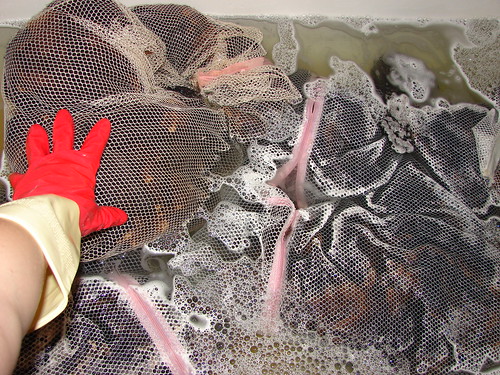
Take your bags of fleece. You don't want to overcrowd- i will usually only do 2-3 lbs at a time in the bathtub to make sure it gets clean. Gently sink them to the bottom of the tub. By the way, I'm sending you good vibes to make sure you don't felt this because, no matter how tempting it might be, you aren't going to touch these bags of fleece once they are wet. LEAVE THEM BE! After the original sinking to get them wet, you aren't allowed to touch them again. You will see lots of yellow-brown water seep out and your tub will start to get fine dirt and grit on the bottom.
Set your timer for 20 minutes. Spin, go for a walk, knit a few rows. After 20 minutes, carefully move the bags of fleece to the shallow end of the tub so the running water won't agitate them at all. Drain the tub, and press out the water from the bags a little to get the dirty out. Fill the tub again with hot water and repeat with the soap. The reason why you only do this for 20 minutes is that you don't want the water to cool so much that the lanolin will re-adhere itself to the fleece.

Once you've got a pretty clear tub, it's time to rise. Fill the tub up with clean, hot water, sink the bags down and leave them for 20 minutes.

Most fleeces I wash are good with 2 washes and 2 rinses. If you have a really crimpy dense fleece like merino, I would go ahead and do a 3rd wash.

I usually dump another boiling kettle down the drain after I'm done, just to make sure I won't have any congealed lanolin clogging the drain. It hasn't happened so far, but I'm pretty sure it's a possibility.

Tired yet? Scrubbed the bathtub clean of sheep dirt and grease? Good! You are almost done.

I don't have an outdoor space to dry, but if you do, take advantage. I set up an old window screen on top of 4 take-out soup containters and put a towel underneath so I don't ruin the floor. I press out as much water as i can from the bags of clean fleece and then empty the bags onto the screen. Don't be tempted to pull apart or try to fluff up the fleece too much or you will end up with nice clean felt. I turn the fleece over once or twice a day to make sure that it's all getting dry. Sometimes I set up a fan nearby to speed the process along.

Congratulations, now you have a clean fleece ready to be carded or combed and spun!